Tarpon are on the beach! Red Snapper bite is off the hook! Big grouper also being caught in numbers! Boston Macks, sardines, squid, and octopus are the ticket.
Tight Lines!
Tarpon are on the beach! Red Snapper bite is off the hook! Big grouper also being caught in numbers! Boston Macks, sardines, squid, and octopus are the ticket.
Tight Lines!

The sale will last for ONE day only and apply to the well known lightweight kayaks- Hurricane and Eddyline. Only boats that are in stock, will have a sale price. We will be open from 8am to 6pm that Saturday. You cannot reserve, put a hold on, or layaway any Hurricane or Eddyline kayak prior to the sale to get the future discounted price. First come, first serve and kayaks must be paid in full. We have a fair amount of Hurricane kayaks in stock, including kayaks in their new mint and coral colors. We have a very limited stock of Eddyline kayaks. Need a local delivery? We provide that as well from Anna Maria to Englewood. Delivery fees apply and delivery will need to be scheduled for future date/time. . Signup for our newsletter to stay informed.
Our kayak seminar will be taught by Dick Pfaff. Dick is a professional certified instructor/tour guide, with over 30 years of paddling experience. He will go over types of kayaks, paddles and PFD’s to help you make the right decision for purchase or rent. He will also spend some extra time on lightweight kayaks. If you plan to attend this seminar, please give us a call and reserve your spot. The seminar must have minimum of 6 guests. Seminar will be held at the Economy Tackle/Dolphin Paddlesports’ shop.

We will be hosting a FREE Kayak Demo Day and Kayak Fishing Seminar at the end of November 2025!
Thinking about buying a kayak for someone special this Christmas? Wanting to get into kayak fishing yourself? This weekend will be all about kayaking and kayak fishing. Come try our large variety of boats and hear from our experts!
Demo Day will be Saturday November 22nd from 9am to Noon. Location Ackerman Park (400 Apex Rd, Sarasota, FL). This will be your chance to try numerous kayaks and experience before you buy. During demo day you will be joined by our kayak specialists. Our knowledgeable team can assist and answer any and all questions. All paddling levels welcome and great for beginners. Pedal, paddle, compare and discuss with our demo team.
Sunday November 23rd at 1pm hear from Chris Lender at the Economy Tackle shop. Chris is our Hobie Pro Staff Fishing Team Member and Florida Redfish Series Champion and Ambassador and 3rd place WINNER of the Hobie Saltwater Series Tournament of Champions. Hear the pro’s, cons and perks of kayak fishing our salty bays and gulf. Learn the safety, tackle, gear and must-have add ons for the ultimate kayak fishing experience. Bring your questions and get ready for an informative and friendly session!
Check out Chris Lender’s social media pages on Facebook, Instagram and Youtube for all his latest fishing adventures and tournaments.
Sign up for our Newsletter to get the latest updates about the demo.If poor weather is a possibility, Demo Day will be cancellled and resheduled for a later date. Notification will come through email but you can also call the store to confirm, Friday before 6pm and Saturday after 8am.
** We will have a variety of kayaks to try but please call with any specific requests.
Need help with kayak repairs? Whether looking for parts on a Do-It-Yourself project or professional kayak repair service, we can help – with over 40+ years of kayak repair experience!
Located in the Sarasota area and need help with transport? We offer pick-up and delivery services. 🚚
We carry a wide range of high-quality parts and accessories to help you repair or upgrade a kayak on your own. For example, we offer:
Check out of list of kayak accessories online here to get you started.
📞 Got questions or ready for a repair? Then give us a call today! In short, whether you’re patching up or leveling up, we’ve got you covered!
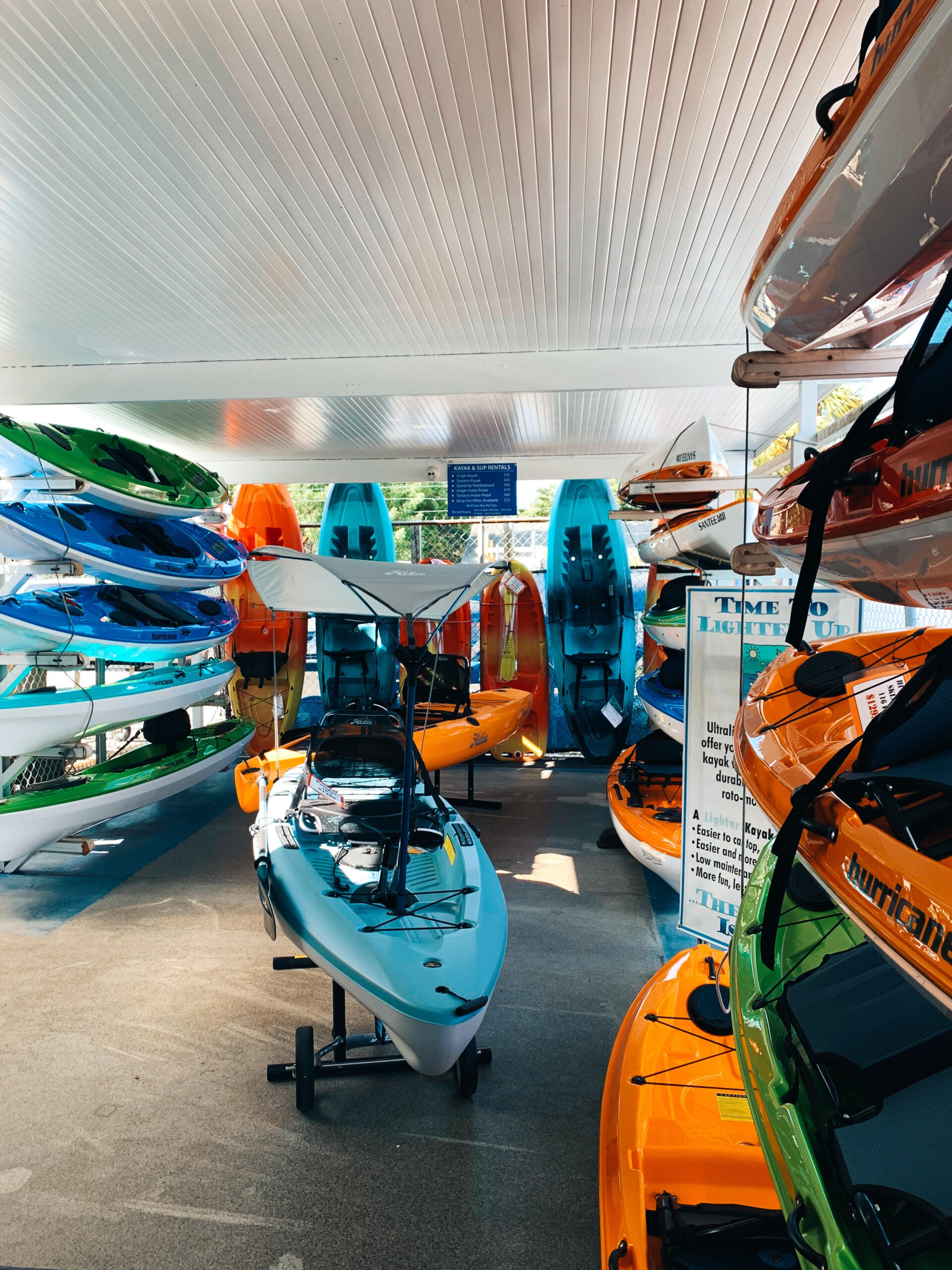
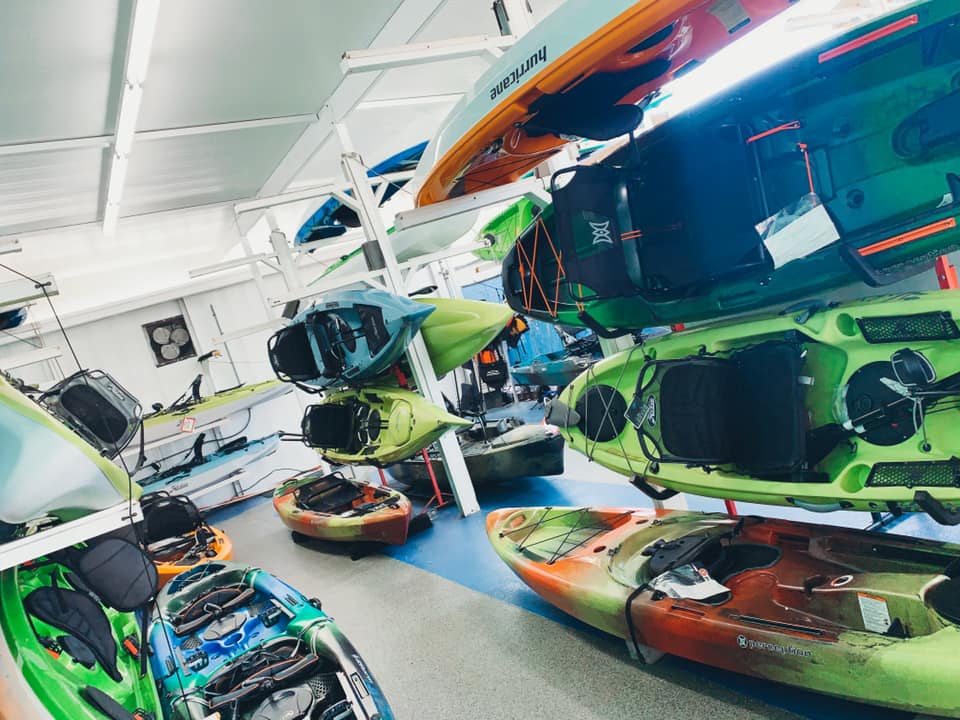
Mint is summer’s color. From boats to totes, it’s a refreshing hue. Check out the trending color in these kayaks and kayak accessories:


Summer may be almost over but your kayak adventures are not. These trending colors are a subtle transition into the cooler months ahead. Come in-store for these products and more, located in our kayak section. Some are also listed on our online store here.
PENN MEET & GREET!
Thursday May 22nd from 4-7pm we will be holding an in store meet & greet with director and brand development manager for all PENN products. We will also have Captain Geoff Page and Ron Houston here with The Florida Insider Fishing Report. We will have giveaways to include a limited amount of PENN combos, rods, and reels as well as Savage and Berkley baits! Hope to see you then! Tight Lines
Are you ready to hit the water this spring? Whether you’re new to paddling or looking to upgrade your kayak, our Paddle N’ Go Spring Kayak Sale and Demo Day is the perfect opportunity to find your perfect match!
Date: Saturday, March 29, 2025
Time: 9 AM – 1 PM
Location: Ken Thompson Park, 1700 Ken Thompson Pkwy, Sarasota

Why Attend Our Kayak Demo Day?
Choosing the right kayak is an important decision, and there’s no better way to make sure you love your new ride than by trying it on the water first! At our demo day, you can test a wide variety of kayaks, including top brands like Hobie, Hurricane, Wilderness Systems, Perception, and Eddyline.
What to Expect
Important Event Information
Weather Notice: In the case of poor weather, the event will be rescheduled. Stay updated by signing up for email notifications on our website or by calling 941-922-9671 for updates Friday evening before 6:00 PM or Saturday morning after 8:00 AM.
Don’t miss this chance to get on the water and experience different kayaks before you buy! We hope to see you at Ken Thompson Park on March 29 for an exciting day of paddling, learning, and fun. Mark your calendar, bring your friends, and get ready to paddle, pedal, and glide your way to your next great adventure!
Sarasota Bay is one of Florida’s premier inshore fishing destinations, a shallow, protected estuary teeming with redfish, snook, trout, and tarpon. For anglers looking to get close to the action without the noise or expense of a motorized boat, a fishing kayak is the perfect solution. But not every kayak is built for the unique demands of Sarasota Bay’s grass flats, mangrove channels, and open water.
This guide walks you through exactly what to look for when choosing a fishing kayak for Sarasota Bay conditions, reviews the top models we carry at Economy Tackle, and helps you match the right boat to your fishing style and budget.
Before you buy any fishing kayak, you need to understand the environment you’ll be fishing in. Sarasota Bay is predominantly shallow, and many of the best fishing spots sit in just 1 to 3 feet of water. The bay features open stretches that can get choppy winds, narrow mangrove tunnels, and grass flats that require a stealthy approach.
These conditions demand a kayak that balances several competing priorities:
1. Shallow water performance: Kayaks already have low drafts, but how shallow you are fishing might determine whether you paddle or pedal
2. Stability: Sarasota Bay’s conditions and environment are better suited for sight fishing, so having a kayak with a wide beam (width) to stand or a high frame seat will give you an advantage.
3. Storage: You’ll want plenty of room in your kayak to take all your needed and desire for a day on the water.
Related Resource: Complete Guide to Kayak Fishing in Sarasota Bay

For Sarasota Bay fishing, sit-on-top (SOT) kayaks are almost always the better choice. Here’s why:
Sit-inside kayaks still have their place; they’re faster and have an advantage in cold weather, but for the vast majority of Sarasota Bay fishing, a sit-on-top is the right call.
One of the biggest decisions you’ll make is whether to go with a traditional paddle kayak or invest in a pedal-drive system. Both have genuine advantages for Sarasota Bay fishing.
For beginners or anglers on a budget, a quality paddle kayak is an excellent starting point. If you’re a serious angler who fishes multiple days per week, the investment in a pedal drive pays dividends quickly.
Related Resource: Our comprehensive kayak fishing resource for Sarasota Bay
Stability: Kayak stability typically comes down to two main factors. 1. In general, wider kayaks provide more stability, making them ideal for standing and casting. Fishing kayaks range from 32″ to 38″ wide, with wider models offering a larger platform to stand or for gear. 2. The shape of the hull plays a role in how a kayak performs on the water and its stability. Basic sit-on-top kayaks often feature a flat hull, which provides solid initial stability, great for casual paddling and fishing, but can lack strong secondary stability and may feel slower. Higher-performance fishing kayaks use hybrid hull designs, combining stability with improved speed and maneuverability.
Look for kayaks with flush-mount rod holders, tracks to add rod holders, or a large tankwell for a crate. You’ll want to keep multiple rods rigged at all times. Switching from a topwater to a soft plastic should take seconds, not minutes.
Most quality fishing kayaks come with gear tracks (also called rail systems) that allow you to mount accessories like fish finders, camera mounts, cup holders, and tackle trays without drilling into the hull. This is a significant advantage; your setup can evolve as your fishing style develops.
For a full day on Sarasota Bay, you’ll need space for a tackle bag, a small cooler or insulated bag, a dry bag for your phone and valuables, and safety gear. Look for a kayak with a large rear tank well with bungee rigging and a front hatch for storage.
Sarasota Bay has dozens of public boat ramps and kayak launches, but getting your kayak from your car to the water often involves a carry of 50 to 100 yards or more, and a kayak cart can make that trip easier. Choose a cart that can carry both the weight of your kayak and your gear. The right wheel type depends on the terrain you’ll be crossing. Most modern kayak carts use airless tires, which perform well over rough ground. For beach use, larger inflatable (balloon-style) tires are essential to help you roll smoothly over soft sand.
We stock a carefully curated selection of fishing kayaks chosen specifically for Sarasota Bay conditions. Here are some of our top recommendations across different price points and fishing styles:
Over the past few months, our most popular fishing kayak has been the Native Slayer 10 LTE. It features a lightweight, grab-and-go design with plenty of room, along with a pedal drive that offers both forward and reverse.
Coming soon, we’ll be welcoming the Bonafide XTR 130, a true fishing machine. It offers generous walkable deck space, a comfortable swivel seat, optional tandem seating, and plenty of gear track space. Plus, we will be adding a Newport Electric Motor for some serious on-the-water performance.
The best budget-friendly option is the Pelican Catch Classic 120. Backed by a well-known name, this sit-on-top kayak offers reliable performance and is a great option for beginners. We also now offer Pelican’s affordable, lightweight pedal fishing kayak- the Catch Kicker 110. This fin drive gives anglers the chance to pursue shallow waters while still using their drive system.
Close behind are the Wilderness Systems Tarpon 120 and the Perception Pescador Pro 12, both offering excellent performance and value. The Tarpon 120 features an integrated track system and a comfortable seat, making it ideal for long days on the water. The Pescador Pro 12 offers a raised frame seat, giving you better visibility for sight fishing while paddling and plenty of storage as well.
For anglers who want hands-free propulsion, the pedal-driven Hobie Outback is a strong contender. It comes fully rigged with the Hobie H-Rail system, a strong, corrosion-resistant platform for easily adding gear- along with map pockets, rod holders, hatches, and a large rear tankwell.
For more serious anglers, we offer the Native Slayer Max Propel and the Hobie Pro Angler 14. Both provide generous storage, comfortable seating, and large, stable platforms designed for standing, casting, and sight fishing.
Related Resource: Everything you need to know about kayak fishing in Sarasota Bay
The kayak is just the beginning. Here are the accessories you’ll want to add to your setup before hitting the water:
Stop by Economy Tackle, and our staff will help you find a fishing kayak tailored to you. We carry all the accessories you need under one roof.
Once you have your kayak, you’ll want to know where to put in. Sarasota Bay has numerous public launch points, from dedicated kayak launches to full boat ramp facilities. The best spot for you depends on what you want to fish and your skill level. Beginners should start at protected launches such as those close to the mangrove islands, while experienced anglers can access more remote flats and open bays.
Choosing the right fishing kayak for Sarasota Bay is one of the best investments you can make as an angler. The right boat puts you in places no motorized vessel can reach, the ultra-shallow flats where redfish tail in the sun, the tight mangrove channels where snook lie in ambush, the grass edges where spotted sea trout cruise at dawn.
Visit Economy Tackle in Sarasota to see our full selection of fishing kayaks. Our staff are local anglers who fish Sarasota Bay regularly, and we’ll help you find the right boat for your fishing style, your budget, and the waters you love to fish.
Related Resource: The ultimate Sarasota Bay kayak fishing guide — techniques, locations, and more
Sarasota Bay stretches roughly 35 miles along the Gulf Coast of Florida, offering an extraordinary variety of fishing environments within easy paddling distance of public launch points. From the shallow grass flats of the upper bay to the deep mangrove channels of the barrier islands, every section of this estuary holds fish year-round.
We’ve identified the 6 best kayak fishing spots in Sarasota Bay. Each location has been selected based on fish diversity, accessibility, and scenic value. We’ve included GPS coordinates, recommended launch points, target species, and the best tackle to bring.
Related Resource: Complete Guide to Kayak Fishing in Sarasota Bay — techniques, gear & more
Most of the spots listed below are accessible from public boat ramps or dedicated kayak launches. Florida law requires a valid fishing license for anyone 16 or older fishing in state waters. Always check current regulations for size and bag limits. Sarasota Bay is subject to FWC rules, and some areas have additional protections.
Tides matter enormously when kayak fishing Sarasota Bay. Many of the best flats fish best on a falling tide that concentrates fish in deeper channels, or on a rising tide as fish push up onto the grass to feed. Download a tide chart app and plan your trips around tidal movement.

GPS: 27°16’15.9″N 82°32’03.6″W | Launch: Phillippi Estate Park
The shallow flats at the mouth of Phillippi Creek are one of the most productive and accessible kayak fishing locations in the entire Sarasota Bay system. A short paddle from the public launch at Phillippi Estate Park puts you on grass flats that regularly hold spotted sea trout, redfish, and snook.
GPS: 27.3621° N, 82.5798° W | Launch: Bayfront park on Longboat Key
The expansive grass flats on the northern end of Sarasota Bay are classic inshore fishing territory. On clear-water days, you can sight-fish to tailing redfish and cruising sea trout across vast stretches of turtle grass. This area rewards patient, quiet anglers who pedal or paddle slowly and let the fish come to them.
GPS: 27.308771, -82.566274 | Launch: Ted Sperling Park
The backside of Lido Key offers an intricate network of mangrove channels that are tailor-made for kayak fishing. Snook hold tight to the mangrove roots year-round, and the channel edges hold redfish and juvenile tarpon, especially in summer. This area requires a stealth approach, slowly and cast tight to the root structure.
GPS: 27.290228, -82.547076
Roberts Bay, located at the southern end of Sarasota Bay, is a productive and often overlooked destination for kayak anglers. The bay’s shallower, more protected waters are excellent for beginners, while the grass flat edges and oyster bars offer serious fishing opportunities. Flounder is a specialty here in the fall and winter.
GPS: 27.335592, -82.579340 | Launch: Ken Thompson Park
New Pass connects Sarasota Bay to the Gulf of Mexico, creating a productive current-driven environment that attracts a wide variety of species. The structure around the pass, bridge pilings, rock jetties, and deep channels holds snook, tarpon, jack crevalle, and Spanish mackerel. This is one of Sarasota’s most exciting kayak fishing spots.
Note: Boat traffic in and around New Pass can be heavy. Kayak anglers should stay alert and wear their PFD at all times in this area.
GPS: 27.2092177°N, -82.511764°W | Launch: Turtle Beach Park
Midnight Pass, recently reopened after being closed for decades, has quickly become one of the most exciting kayak fishing destinations in the Sarasota area. The restored tidal flow has dramatically improved water clarity and oxygen levels throughout this section of Little Sarasota Bay, and the fishing has responded in kind. The Jim Neville Marine Preserve, accessed from Turtle Beach Park on the south end of Siesta Key, protects a stretch of pristine grass flats and mangrove shoreline that sits right in the shadow of the pass. Crystal-clear water makes sight-fishing to redfish and trout here as good as anywhere in the bay system. The renewed tidal exchange through Midnight Pass pulls bait and predators through the area on every tide cycle, creating consistent action that improves year by year as the ecosystem continues to recover. Paddle south from Turtle Beach into the preserve and work the grass flats in 1–3 feet of water for tailing reds, or fish the mangrove edges near the pass itself for snook stacked up in current.
For any of these locations, pack the following essentials:
Related Resource: The ultimate guide to kayak fishing in Sarasota Bay — gear, techniques & safety
Pedal-drive kayaks have changed inshore fishing in Sarasota Bay more than any other single piece of equipment in the last decade. Keeping both hands free while you cover water, hold position in current, and cast to tailing redfish isn’t a luxury anymore; it’s the standard for serious kayak anglers. But once you decide you want a pedal kayak, you face a choice that trips up a lot of buyers: fin drive or propeller drive?
Both systems get you across the water hands-free. Beyond that, they work quite differently, and which one is right for you depends entirely on where and how you fish. At Economy Tackle, we carry pedal kayaks with both systems and help customers work through this choice every week. Here’s what you need to know.
For more, visit our complete guide to kayak fishing in Sarasota Bay.

Fin drive systems use a side-to-side pedaling motion, like a fish tail, to power two flexible fins that push water backward and propel the kayak forward. The original and most recognized fin drive is Hobie’s MirageDrive, but other manufacturers have developed their own variations. The pedal motion is more of a back-and-forth stair-stepping (pushing) movement than traditional cycling.
Propeller drive systems use a conventional circular pedaling motion, like a bicycle, to spin an underwater propeller. Native Watercraft’s Propel system and several other brands use this approach. Because it mirrors the motion most people already know from cycling, many anglers find propeller drives more intuitive from day one.
Sarasota Bay’s defining characteristic is its shallow water. The grass flats where redfish tail, the mangrove creek edges where snook ambush, the backcountry pockets behind the keys- most of the best fishing happens in 6 to 24 inches of water. This is where fin drive and propeller drive differ most significantly.
Fin drives have a low profile in the water and retract upward easily. The flexible fins can deflect off grass and bottom without damage, and the retraction mechanism on most models is simple and fast. In very shallow water, under 10 inches, experienced fin drive anglers can often keep the drive deployed and continue moving where a prop drive would need to be raised. The fins also don’t catch grass as aggressively as a spinning propeller.
Propeller drives sit deeper in the water column than fin drives, which means they reach their draft limit sooner in shallow water. In skinny water, you’ll need to retract the drive more frequently. The propeller itself can catch grass and debris on the spin, requiring occasional clearing, something most propeller drive users just accept as a routine part of fishing in grass beds. That said, modern propeller drives have improved significantly in how well they handle grass, and the retraction systems have become faster and more intuitive.
On open water, propeller drives generally have the edge in raw speed and efficiency. The continuous circular pedaling motion delivers consistent thrust, and the hydrodynamics of a spinning propeller are well-optimized for forward movement. If you’re covering long distances across open bay, say, from Ken Thompson Park out to the far north bay flats, a propeller drive will get you there with less effort.
Fin drives, with their oscillating motion, are efficient but not quite as fast in straight-line open water runs. Where they shine is in variable conditions: the fin motion provides natural braking, and more responsive speed control at low speeds, useful when you’re inching up on a tailing redfish.
This is one of the clearest practical differences between the two systems. Most quality pedal drives offer reverse, but the implementation differs. Fin drives with reverse, like the Hobie 180° MirageDrive, simply rotate the fins 180 degrees so they push water the opposite direction. It’s smooth and natural. Propeller drives that offer reverse generally do so through a mechanical shift or the ability to pedal backward, which is also effective but can feel slightly less intuitive at first.
For kayak fishing, reverse matters more than most anglers expect. Backing off a flat without spinning the kayak, repositioning off a mangrove root without paddling- these are real fishing situations where reliable, easy reverse earns its keep.
Fin drives are mechanically simpler than propeller drives. The flexible fins are the main wear component and are replaceable. The drive chains and idler cables are the other key components to care for; they must be rinsed thoroughly with fresh water after each and every use to clear saltwater, and inspected periodically for wear. Overall, fin drives are forgiving and reliable.
Propeller drives have more moving parts: the prop itself, a driveshaft, and sometimes a gear system. Saltwater is harder on these components over time. The propeller is the most vulnerable component; a hard strike on an oyster bar or rocky bottom can bend or chip a prop. Replacement props are readily available and inexpensive, but it’s a consideration.
At Economy Tackle, Native Watercraft kayaks have grown significantly in popularity, and the Propel system is a big reason why. Native’s approach to propeller drive addresses the main concerns anglers have about the system:
The Native Slayer series and the new LTE 10, which we covered in our recent electric motor blog, are both built around the Propel system and represent the current state of the art in fishing kayak versatility for Sarasota Bay conditions.
Here’s the honest summary:
We carry Native Watercraft pedal kayaks and can walk you through both drive systems side by side. Whether you’re buying your first pedal kayak or upgrading from an older model, our staff fishes these same waters and can give you an honest recommendation based on where you actually fish. Visit us at 6018 S. Tamiami Trail, Sarasota.
For more, visit our ultimate guide to kayak fishing in Sarasota Bay.