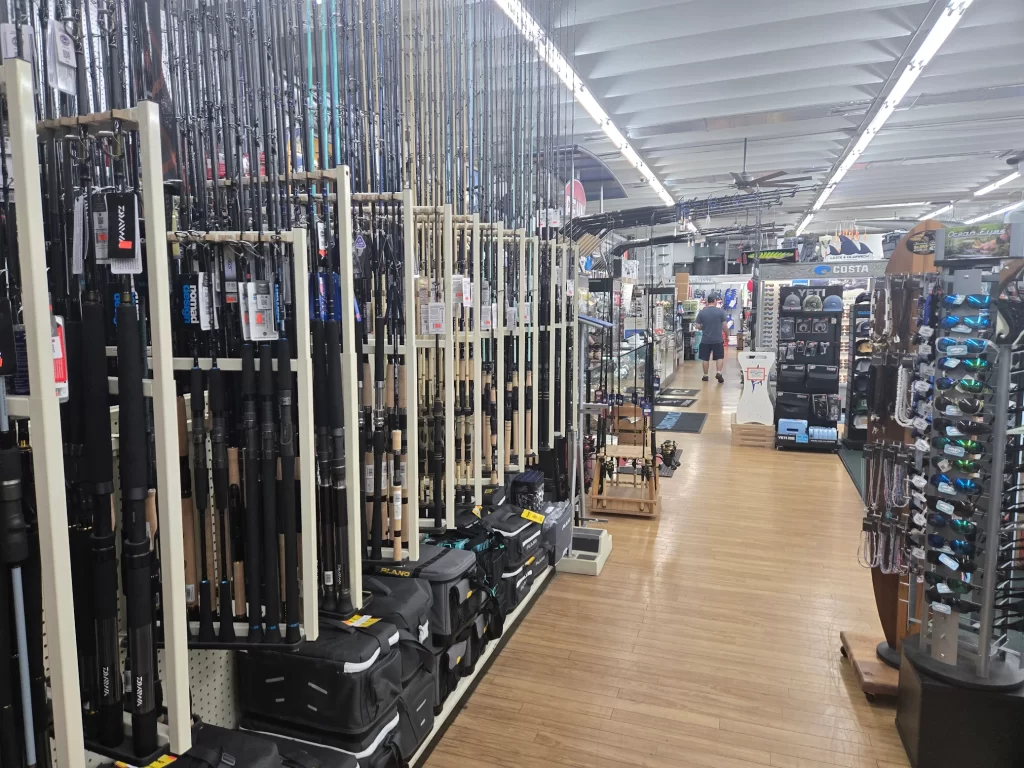
Live Bait Available: Shrimp and Worms

Limited Time Hobie Mirage Eclipse Promotion!

The verdict is in and stand up paddle boarding is not just a summer activity! In the last few years stand up paddle boarding has exploded in popularity as experienced and novice outdoor explores alike flock to this great water activity.  The immediate draw of stand up paddle boarding has been the ease of taking up this sport.

While surfing requires a higher than average dexterity and flexibility, stand up paddle boarding can be picked and enjoyed by kids, older adults and everyone in between. This waterborne activity even has ancient beginnings as an easy way to travel between islands. Unlike its close cousin, surfing, stand up paddle boarding does not require waves to practice.

Stand up paddle boarding is easy to pick up. At the same time it provides a great full body work out that enhances control one has over one’s core. Your abs will get a quick boost in muscles while your legs get toned as you stay afloat taking in the beautiful water views. Stand up paddle boarding provides a great opportunity to go out and enjoy fresh air especially as we enter the deeper winter months.

The more popular stand up paddle boarding gets, the more manufacturers compete to create the perfect board to take out on the water. None is more advanced in comfort, safety and easy than the Hobie Mirage Eclipse. Created by the Hobie Cat Company established in 1950, no cost or research was spared in crafting the perfect stand up paddle board.

The Hobie Mirage Eclipse revolutionized paddle boarding by adding the incredible Hobie MirageDrive pedal drive. This leg powered paddle boarding method harnesses the strongest muscles in your body, your legs. This frees up your arms for waving, pointing, taking pictures, fishing, and overall allowing you to be more involved in the water than just using your hands and arms to propel your board.

This holiday season Economy Tackle has partnered with Hobie to make the Mirage Eclipse even more affordable for outdoor enthusiasts. Until December 31st all Hobie Mirage Eclipse stand up paddle boards are discounted by $250 for one and $375 for two! This is an unprecedented offer for an amazing top tier, top of the line stand up paddle board.

Hurry these boards are going fast. Call your local experts at Economy Tackle/Dolphin Paddlesports at (941) 922-9671 or send them a quick message to take advantage of this limited time offer today!
Recent News

Top 6 Kayak Fishing Spots in Sarasota Bay

Sarasota Bay stretches roughly 35 miles along the Gulf Coast of Florida, offering an extraordinary variety of fishing environments within easy paddling distance of public launch points. From the shallow grass flats of the upper bay to the deep mangrove channels of the barrier islands, every section of this estuary holds fish year-round.

We’ve identified the 6 best kayak fishing spots in Sarasota Bay. Each location has been selected based on fish diversity, accessibility, and scenic value. We’ve included GPS coordinates, recommended launch points, target species, and the best tackle to bring.

Related Resource: Complete Guide to Kayak Fishing in Sarasota Bay — techniques, gear & more

A Note on Sarasota Bay Fishing Access

Most of the spots listed below are accessible from public boat ramps or dedicated kayak launches. Florida law requires a valid fishing license for anyone 16 or older fishing in state waters. Always check current regulations for size and bag limits. Sarasota Bay is subject to FWC rules, and some areas have additional protections.

Tides matter enormously when kayak fishing Sarasota Bay. Many of the best flats fish best on a falling tide that concentrates fish in deeper channels, or on a rising tide as fish push up onto the grass to feed. Download a tide chart app and plan your trips around tidal movement.

best paddle shop near bradenton

Spot 1: Phillippi Creek Flats

GPS: 27°16’15.9″N 82°32’03.6″W | Launch: Phillippi Estate Park

The shallow flats at the mouth of Phillippi Creek are one of the most productive and accessible kayak fishing locations in the entire Sarasota Bay system. A short paddle from the public launch at Phillippi Estate Park puts you on grass flats that regularly hold spotted sea trout, redfish, and snook.

  • Best species: Spotted sea trout, redfish, snook
  • Best tides: Outgoing tide concentrates fish at the creek mouth
  • Recommended tackle: Soft plastic paddletails on 1/4 oz jigheads, weedless gold spoons
  • Best times: Early morning, October through May

Spot 2: Sarasota Bay Grass Flats (North End)

GPS: 27.3621° N, 82.5798° W | Launch: Bayfront park on Longboat Key

The expansive grass flats on the northern end of Sarasota Bay are classic inshore fishing territory. On clear-water days, you can sight-fish to tailing redfish and cruising sea trout across vast stretches of turtle grass. This area rewards patient, quiet anglers who pedal or paddle slowly and let the fish come to them.

  • Best species: Redfish, spotted sea trout, flounder
  • Best tides: Incoming tide as fish push onto the flats
  • Recommended tackle: Weedless soft plastics, topwater plugs at dawn
  • Best times: Year-round; summer mornings before wind builds

Spot 3: Lido Key Mangrove Channels

GPS: 27.308771, -82.566274 | Launch: Ted Sperling Park

The backside of Lido Key offers an intricate network of mangrove channels that are tailor-made for kayak fishing. Snook hold tight to the mangrove roots year-round, and the channel edges hold redfish and juvenile tarpon, especially in summer. This area requires a stealth approach, slowly and cast tight to the root structure.

  • Best species: Snook, redfish, juvenile tarpon (summer)
  • Best tides: Rising tide as fish move into the mangroves
  • Recommended tackle: DOA Shrimp, live bait under a popping cork
  • Best times: Year-round; best for snook, May through October

Spot 4: Roberts Bay

GPS: 27.290228, -82.547076 

Roberts Bay, located at the southern end of Sarasota Bay, is a productive and often overlooked destination for kayak anglers. The bay’s shallower, more protected waters are excellent for beginners, while the grass flat edges and oyster bars offer serious fishing opportunities. Flounder is a specialty here in the fall and winter.

  • Best species: Flounder, redfish, sheepshead, trout
  • Best tides: Outgoing tide along oyster bar edges
  • Recommended tackle: Live shrimp, gulp shrimp on jigheads
  • Best times: October through March for flounder

Spot 5: New Pass

GPS: 27.335592, -82.579340 | Launch: Ken Thompson Park

New Pass connects Sarasota Bay to the Gulf of Mexico, creating a productive current-driven environment that attracts a wide variety of species. The structure around the pass, bridge pilings, rock jetties, and deep channels holds snook, tarpon, jack crevalle, and Spanish mackerel. This is one of Sarasota’s most exciting kayak fishing spots.

  • Best species: Snook, tarpon, Spanish mackerel, jack crevalle
  • Best tides: Strong tidal flow is key; fish the movement
  • Recommended tackle: Live bait, swimbaits, topwater lures
  • Best times: May through October for snook and tarpon

Note: Boat traffic in and around New Pass can be heavy. Kayak anglers should stay alert and wear their PFD at all times in this area.

Spot 6: Midnight Pass — Jim Neville Marine Preserve

GPS: 27.2092177°N, -82.511764°W | Launch: Turtle Beach Park

Midnight Pass, recently reopened after being closed for decades, has quickly become one of the most exciting kayak fishing destinations in the Sarasota area. The restored tidal flow has dramatically improved water clarity and oxygen levels throughout this section of Little Sarasota Bay, and the fishing has responded in kind. The Jim Neville Marine Preserve, accessed from Turtle Beach Park on the south end of Siesta Key, protects a stretch of pristine grass flats and mangrove shoreline that sits right in the shadow of the pass. Crystal-clear water makes sight-fishing to redfish and trout here as good as anywhere in the bay system. The renewed tidal exchange through Midnight Pass pulls bait and predators through the area on every tide cycle, creating consistent action that improves year by year as the ecosystem continues to recover. Paddle south from Turtle Beach into the preserve and work the grass flats in 1–3 feet of water for tailing reds, or fish the mangrove edges near the pass itself for snook stacked up in current.

  • Best species: Redfish (sight fishing), snook, spotted sea trout, flounder
  • Best tides: Incoming and outgoing are both productive; outgoing concentrates fish near the pass
  • Recommended tackle: Gold spoon or D.O.A. shrimp for flats reds; live shrimp or pilchards near the pass for snook
  • Best times: Year-round; fall and spring are peak for flats fishing; summer evenings near the pass for snook

Planning Your Trip: What to Bring

For any of these locations, pack the following essentials:

  • Fishing license (available at Economy Tackle or online at myfwc.com)
  • PFD (personal flotation device) — required by Florida law
  • Sunscreen, hat, and sun-protective clothing
  • Plenty of water — minimum 32 oz per hour in summer heat
  • Tide chart and weather forecast
  • Marine VHF radio or fully charged cell phone
  • Anchor with at least 30 feet of line

Related Resource: The ultimate guide to kayak fishing in Sarasota Bay — gear, techniques & safety

Live Bait vs. Artificial Lures for Inshore Florida Fishing: When to Use Each

Ask ten anglers whether they prefer live bait or artificial lures, and you’ll get ten different answers, usually delivered with strong opinions. The truth is that both have a place in your arsenal, and knowing when to reach for each one is what separates a productive day on the water from a slow one.

If you’re fishing Sarasota Bay and the surrounding inshore waters of Southwest Florida, here’s what experience actually teaches you about this debate.

The Case for Live Bait

Live bait works because it’s real. The scent, the movement, the vibration in the water — fish have been eating these things their entire lives. On tough days when the fish are pressured, lethargic from temperature swings, or simply not in a chasing mood, live bait often gets bites that artificials can’t buy.

Shrimp is the universal inshore bait in Florida. Snook, redfish, trout, flounder, sheepshead, snapper — virtually everything that swims inshore will eat a live shrimp. Fished under a popping cork, free-lined on a light jighead, or drifted along the bottom, shrimp is a go-to choice for beginners and experienced anglers alike. It’s also widely available at Economy Tackle and bait shops throughout the Sarasota area.

Pinfish and grunt are the preferred live bait for targeting larger snook and redfish. Hook a lively pinfish near a mangrove edge or under a dock light at night, and you’re presenting exactly what big snook are already hunting. Pinfish are easy to catch on a small hook and a piece of shrimp, and a live well full of them is serious ammunition.

Mullet in various sizes covers a wide range of situations. Finger mullet are excellent for redfish on the flats and snook along shorelines. Larger cut mullet fished on the bottom is one of the most effective redfish and black drum baits on the market, especially in passes and deeper structure.

Live bait shines when fish are inactive, water temperatures are extreme (very cold or very hot), visibility is low, or you’re targeting a specific large fish that’s been finicky. It also tends to produce faster results for beginners who are still learning to work with artificials effectively.

The downsides are real, though. Live bait requires a live well or aerated bucket, burns through your supply quickly if fish aren’t cooperating, and limits how much water you can cover. You’re committed to fishing an area rather than searching for fish.

No Live Bait Needed

The Case for Artificial Lures

Artificials let you fish faster, cover more water, and target specific behaviors and depths with precision. A good angler with the right lure can consistently match or outfish live bait under the right conditions.

Soft plastic paddle tails and shrimp imitations are the workhorses of inshore Florida fishing. Rigged on a light jighead, a soft plastic can be worked through the water column, bounced along the bottom, or slowly retrieved just under the surface. They’re effective for trout on the flats, redfish in the grass, and snook around structure. Brands like DOA, Z-Man, and Gulp have proven track records in Sarasota Bay.

Topwater lures produce some of the most exciting fishing you’ll experience inshore. Early morning on a calm flat, a walking topwater bait worked slowly over the grass can draw explosive strikes from trout and snook. The visual element of the strike is addictive. When conditions are right, nothing beats it.

Gold spoons are one of the oldest and most reliable redfish baits in existence. A weedless gold spoon wobbled across a shallow flat mimics a fleeing baitfish and triggers instinctive reaction strikes from redfish and trout. They’re also castable in the wind, durable, and inexpensive.

MirrOlures and suspending twitch baits are particularly effective for trout in cooler months when fish are holding in specific depth ranges. A slow, twitching retrieve that keeps the lure in the strike zone longer produces well when fish aren’t actively chasing.

Artificials are the better choice when fish are actively feeding, when you need to cover water to locate schools, when you’re sight-fishing and need precise casts, or when you simply don’t have access to fresh live bait. They require more skill and practice to use effectively, but that investment pays off over time.

When Live Bait Wins

Live bait has a clear edge in these situations:

Fish are inactive due to cold fronts or dramatic temperature drops. Sarasota Bay sees water temperatures dip into the low 60s in winter, and fish slow down considerably. A live shrimp sitting in their face is far easier to eat than a lure requiring a chase.

Visibility is poor. After heavy rain, strong tidal flow, or wind chop, water clarity drops, and fish are relying on scent as much as sight. Live bait produces scent trails that artificials can’t replicate.

You’re targeting sheepshead, flounder, or black drum specifically. These species respond far better to live or cut bait than to most artificial presentations.

Beginners who are still developing their retrieve techniques will consistently catch more fish on live bait while building confidence on the water.

When Artificials Win

Artificials have a clear edge in these situations:

Fish are actively feeding on the surface or chasing bait. When you can see bait getting pushed and birds working, an artificial cast into the action often outperforms live bait because you can keep up with the school.

You’re covering a lot of water looking for fish. Kayak anglers working the flats of Sarasota Bay can cover significant ground more efficiently with artificials, stopping to work live bait only once fish are located.

Sight-fishing on shallow, clear flats. A soft plastic or gold spoon dropped 18 inches in front of a tailing redfish is often more effective than fumbling with live bait and potentially spooking the fish.

You need to make repeated casts to the same area without burning through your bait supply.

The Smart Approach: Use Both

The most productive inshore anglers don’t commit exclusively to one or the other. They start with artificials to locate fish and cover water, then switch to live bait when they’ve found where fish are holding or when conditions call for it. Keeping a small supply of live shrimp on the kayak as a backup is almost always worth it.

At Economy Tackle, we stock both a full selection of proven inshore lures and fresh live and frozen shrimp daily. Whether you’re heading out with a box of soft plastics or need to load up on shrimp before an early morning tide, stop by, and we’ll make sure you’re set up for the conditions.

Fishing Florida’s Tarpon Season from a Kayak: What You Need to Know

There are fish, and then there are tarpon. Few inshore species command the same respect, obsession, and outright awe as the Silver King. Hooking one from a kayak puts you in a category of angling that very few anglers ever experience, and Southwest Florida is one of the best places in the world to do it.

If you’ve been thinking about targeting tarpon from your kayak this season, here’s what you need to know before you head out.

When Tarpon Arrive in Southwest Florida

Tarpon begin showing up along Florida’s Gulf Coast in earnest starting in April. By May, the migration is in full swing, and June and July represent the peak of tarpon season in the Sarasota and Charlotte Harbor region. Fish push through the passes, stack up along beaches, and work their way into bays and backwater areas following bait pods and favorable water temperatures.

Water temperature is the key driver. Once Gulf waters consistently hit the low to mid 70s, tarpon become increasingly active and catchable. By late spring, fish are rolling on the surface, daisy-chaining in passes, and showing themselves in numbers that can genuinely take your breath away.

The season winds down through August as many fish continue their migration south or push offshore, though resident fish and late-season stragglers keep things interesting well into fall in some years.

fishing for tarpon in sarasota on kayak

Best Areas Near Sarasota for Kayak Tarpon Encounters

You don’t need to travel far. Some of the most productive tarpon waters in Florida are right in the Sarasota area.

Longboat Pass and New Pass are the top producers during the migration. Tarpon stack in these cuts as they move between the Gulf and the bay, and a kayak angler positioned on the edges of the current can intercept fish that boat traffic pushes away from the channel center. Early morning, before boat traffic picks up, is prime time.

Big Pass near Siesta Key is another reliable corridor. The bridge pilings and channel edges hold fish and give kayak anglers natural structure to work around.

Sarasota Bay itself sees tarpon working through during the migration, particularly along the deeper grass flat edges and near the ICW. Sight-fishing opportunities on calm mornings can be exceptional when fish are rolling.

The beaches along Lido Key and Longboat Key hold migrating tarpon tracking just outside the first sandbar during May and June. Kayak anglers who launch from public beach access points and work parallel to the shore can find fish that are almost within casting distance of the sand.

The Tackle You Need

This is not the time for your trout rod. Tarpon are large, powerful, and will destroy underpowered gear. Rigging correctly before you launch is non-negotiable.

For spinning gear, a quality 7’6″ to 8′ heavy rod paired with a 6000 to 8000 class reel is the standard starting point. Spool with 50 to 65 lb braided line. Braid gives you the sensitivity to feel what’s happening and the strength to apply serious pressure during a fight.

For baitcasting setups, a heavy flipping or casting rod in the 7′ to 7’6″ range with a high-capacity reel spooled with 65 lb braid is a strong choice. Baitcasters allow for precise placement when sight-casting to rolling fish.

Leader selection is critical. Tarpon have abrasive mouths and gill plates that will cut through light fluorocarbon in seconds. Use 60-80 lbs fluorocarbon leader, typically 4 to 6 feet in length, attached to the braid with a quality knot. A circle hook in the 6/0 to 10/0 range is the right terminal choice for most live bait presentations.

Live Bait vs. Lures: Which Approach to Take

Both work, and the right choice depends on conditions and how the fish are behaving on a given day.

Live bait is the most consistent producer for kayak tarpon fishing in the Sarasota area. Live crabs, particularly blue crabs and pass crabs, are considered among the top tarpon baits in Florida. Large live mullet, threadfin herring, and pinfish are also excellent options. Free-lining live bait in a pass on an incoming tide with fish actively moving through is as productive as it gets.

Artificial lures shine when fish are in a chasing mood or when you’re targeting rolling fish on open flats and beaches. Large swimbaits, tarpon-specific snook plugs, and streamer-style lures in the 6 to 8 inch range can draw aggressive strikes. Working a large paddle tail or a surface plug past a daisy chain of rolling tarpon is a sight you won’t forget, regardless of whether they eat.

Presentations need to lead the fish. Cast well ahead of the direction they’re moving and bring the bait across their path. A tarpon that has to turn to chase a bait is far more likely to commit than one that sees the lure coming straight at it.

Fighting and Releasing Tarpon from a Kayak

This is where things get real. A 100 lb tarpon on the end of your line and a 12-foot kayak under you is a combination that demands respect and preparation.

When the fish jumps, bow to the king. Drop your rod tip toward the fish during jumps to create slack and reduce the chance of a thrown hook or a broken rod from the impact. Tarpon jump repeatedly and violently, and keeping tension through every leap is how gear gets destroyed.

Be prepared to be moved. Tarpon will pull a kayak significant distances and in directions you don’t choose. Know your surroundings before you hook up. Avoid fishing near heavy boat traffic, bridge pilings, or areas with strong crossing currents that could put you in a dangerous position.

Keep the fight as short as possible. Tarpon are powerful, but they tire, and a fish that’s been fought to exhaustion takes longer to recover and faces a higher risk of post-release mortality. Apply steady, confident pressure throughout the fight. Don’t let the fish sit still and recover mid-fight.

For the release, keep the tarpon in the water at all times if possible. If you need to touch the fish, support it horizontally and never hold a tarpon vertically by the lower jaw, as this can damage internal organs. Hold the fish upright in the water, pointing into any available current, until it kicks free on its own.

One important note on Florida regulations: Tarpon are a catch-and-release-only species, and no harvest is permitted. Tarpon over 40 inches must remain in the water at all times when caught, per FWC guidelines. Only hook-and-line fishing is allowed; snagging, snatch hooking, and spearing of tarpon are prohibited.

Anglers pursuing a Florida state or world record may purchase a tarpon tag through the Florida Fish and Wildlife Conservation Commission for $50, with a limit of one tag per person, per year.

Please note that fishing regulations can change frequently, sometimes daily, weekly, or seasonally, and vary by location based on factors such as water conditions, fish populations, and conservation needs. Always verify current rules with the FWC before heading out.

Safety Considerations

Tarpon fishing from a kayak is exhilarating. It’s also the kind of fishing that requires you to think ahead.

File a float plan with someone on shore before heading out to passes or beaches. Know the tide schedule and how it affects current strength in the passes you’re fishing. Wear your PFD. This is non-negotiable when targeting large fish that can put you in unpredictable situations quickly.

Carry a line cutter or knife accessible without digging through gear. If a fish wraps you in your own line or runs under the kayak, you need to be able to cut free immediately. Keep your hooks attended and never leave a rigged rod where it could contact your body during a sudden run.

The experience of fighting a tarpon from a kayak is unlike anything else inshore fishing offers. It requires preparation, the right gear, and sound judgment on the water. Get those things right, and you’ll have stories worth telling for a long time.

Stop by Economy Tackle before tarpon season heats up. We carry the tackle, leader material, live bait, and local knowledge to get you ready. Visit us at floridakayak.com or come see us in Sarasota.

Economy Tackle Is Hosting the 2026 Paddling Film Festival on Earth Day

Some nights remind you why you got into paddling in the first place. April 22nd is one of those nights.

Economy Tackle is proud to host the 2026 Paddling Film Festival at Burns Court Cinema in Sarasota, bringing one of the paddling world’s most celebrated annual events right to our backyard. Whether you’re a seasoned kayak angler, a weekend paddler, or someone who’s been thinking about getting on the water, this is an evening worth clearing your calendar for.

Paddling Film Festival 2026
 

What Is the Paddling Film Festival?

Now in its 21st year, the Paddling Film Festival is an internationally recognized showcase of the best paddling films from around the world. The annual World Tour kicks off each January at the Toronto International Boat Show and travels to venues across the globe, putting the sport’s most breathtaking footage in front of audiences who live and breathe time on the water.

The films span the full range of paddling culture: whitewater kayaking, sea kayaking, SUP, canoe expeditions, fishing from human-powered craft, and everything in between. The common thread is a love of wild places, moving water, and the particular kind of freedom that only comes from a paddle in your hands.

You can get a preview of this year’s lineup at the official Paddling Film Festival trailer and learn more at paddlingfilmfestival.com.

Event Details

Date: Wednesday, April 22nd, 2026 (Earth Day)

Doors Open: 5:30 PM

Show Begins: 6:00 PM

Location: Burns Court Cinema, 506 Burns Court, Sarasota, FL 34236

Tickets are available online and in-store at Economy Tackle.

Why Earth Day

Hosting this event on Earth Day is fitting in a way that goes beyond coincidence. Paddlers are among the most connected people to the natural environments they move through. The rivers, bays, flats, and coastlines that make Southwest Florida one of the great paddling destinations in the country are worth protecting, celebrating, and experiencing firsthand. This night does all three.

Sarasota Bay and the surrounding waters have been central to Economy Tackle’s identity for decades. We’ve watched countless customers walk in unsure about kayak fishing, get outfitted, and come back with stories they couldn’t stop telling. That’s the paddling lifestyle in action, and the Paddling Film Festival captures exactly that spirit on screen.

This Year’s Lineup

Here’s a look at the films on the program for our screening. Click any title to watch the trailer.

1000 Miles to Tuk

A paddling journey of a thousand miles through Canada’s remote north, tracking the Mackenzie River system to the Arctic Ocean. Big landscapes, bigger commitment.

How to Self Rescue on a Paddleboard

An essential film for anyone on a board. Practical, empowering, and a reminder that knowing what to do when things go sideways is part of being a confident paddler.

Patso

A character-driven paddling story with heart. Watch the trailer to get a feel for what this one brings to the night.

A Little Bit Different

A film about finding your own path on the water. Expect something that challenges what you thought paddling could look like.

Riverbound. The Story Has Just Begun

A river paddling story built around the idea that every expedition opens a door to the next one. Moving, wide-open, and hard to shake.

Gabon Uncharted

An expedition into the wild waterways of Gabon, West Africa — one of the last truly uncharted paddling frontiers on the planet. Stunning and genuinely adventurous.

Six films. One night. Grab your tickets here before they sell out.

What to Expect on the Night

Burns Court Cinema is one of Sarasota’s most beloved independent theaters, and it’s the right setting for this kind of event. Doors open at 5:30, giving you time to get settled, connect with other local paddlers, and soak in the atmosphere before the films begin at 6:00.

The lineup is curated to inspire. You’ll watch athletes push into remote river canyons, sea kayakers cross open water stretches that most people would never attempt, and everyday paddlers find something extraordinary in the places closest to home. The filmmaking quality is exceptional, and the effect on an audience of people who love being on the water is hard to describe until you’ve experienced it.

Expect to leave wanting to paddle something. That’s kind of the whole point.

Come See Us Before You Go

If the films do what they tend to do and leave you fired up to get on the water, Economy Tackle is ready for you. We carry a full selection of fishing kayaks, paddle kayaks, and everything needed to get outfitted for Sarasota Bay and beyond. Our staff knows the local water and can point you toward the right gear, the right launch spots, and the right setup for wherever the films inspire you to go.

Tickets for the Paddling Film Festival are available online and in-store. Grab yours early, bring a friend who’s been on the fence about paddling, and join us for a night of adventure at Burns Court Cinema.

We’ll see you there. Then we’ll see you on the water.

Buy tickets online or in-store at Economy Tackle. Visit floridakayak.com for more information.


Fishing Report- Friday March 20, 2026

Spring is here! With hopes of this being the last cold front of the season, things sure are heating up out there! We’ve had a few reports of bait showing up in the bay, once the temps rise a few more degrees it should start to come in nicely. With high winds preventing people from getting too far offshore, some have still been able to capitalize on some nice red grouper and mangrove snappers in about 100′ of water. Pleanty of cobia showing up and theyre at scattered depths. A few hogfish were mentioned this week off of Anna Maria Island in about 40′. Some mackerel have been reported off of the beach and in the bay and the pompano have been nonstop all week! Some smaller permit mixed in with them. Black drum are being reported off of turtle beach as well. Inshore redfish and trout and very consistent the past couple weeks and plenty of snook starting to cruise the flats! Things will only get better in the upcoming weeks. There have even been a few small schools of tarpon reported out off the beach. It wont be long!!

***UPCOMING EVENTS***

TARPON FISHING SEMINAR!

THURSDAY APRIL 23RD W/ CAPT AJ GRANDE 5:30PM

NO RESERVATION NEEDED

Tight Lines!!

2026 PADDLE N’ GO SPRING KAYAK SALE, DEMO AND SEMINAR!!

Our annual spring kayak sale and demo day is here! Plus we will host another kayak fishing seminar with local legend, Chris Lender.

Demo Day:

Our free demo day will be hosted at Ken Thompson Park on lido key, Saturday March 21st @ 9a to Noon. 

Come try before you buy. We will host a variety of kayaks from pedal to paddle driven, sit-in to sit-on top.

We host the largest selection of kayaks in Sarasota Florida, from:

Hobie, Hurricane, Eddyline, Perception, Wilderness System and Pelican. 

This paddling event is for all levels of experience. We have knowledgeable team of staff, as well as some of our company brand reps to assist and answer any and all of your questions.

**Sale exlcudes Hobie products, trailers and electronics.


Kayak Fishing Seminar

Join local legend and Hobie Pro Staff memeber Chris Lender as he discusses the pro’s and con’s of kayaking fishing our salty bay waters.

Chris is a

  • Florida Redfish Series Champion
  • Florida Redfish Series Ambassador
  • 3rd Place WINNER of the Hobie Saltwater Series Tournament of Champion

The seminar will be held at 6018 S Tamiami Trl, Sarasota, FL in our kayak shop and display area Sunday March 22nd @ 11am.

Lender offers insights to using the Hobie Pro Angler 360, shares his favorite rods and reels, and gives tips on what lures to use in our waters.

This is an event not to miss. No registration needed. Come as you are and enjoy this very popular kayak fishing seminar.


Hope to see you there! Tight lines and happy paddling. 


Kayak Safety Gear: Why a PFD Could Save Your Life on Sarasota Bay

Paddling Sarasota’s waterways is one of the best ways to experience Florida’s coastline, but it comes with real risks that too many paddlers underestimate. Paddling Magazine has published several reports analyzing kayak and paddle board accidents across the country, and a troubling pattern shows up again and again: paddlers who weren’t wearing a personal flotation device, or PFD, are dramatically overrepresented in serious incidents and fatalities.


At Economy Tackle, located at 6018 S Tamiami Trl, Sarasota, FL, we believe safety gear isn’t optional, it’s essential. This guide covers what the data shows about PFD use, the safety equipment every paddler should carry, and how you can get involved in protecting the very waters you paddle through our upcoming seminar with the Sarasota Bay Estuary Program.

What Paddling Magazine’s Accident Reports Reveal About PFD Use

Paddling Magazine has tracked kayaking and paddle board accidents for years, and the data consistently points to one factor above all others: whether or not the paddler was wearing a PFD at the time of the incident.


This isn’t a minor statistical footnote. It’s a clear signal that the single most effective piece of safety gear you can wear while paddling is also one of the most commonly skipped, often for reasons that feel reasonable in the moment but leave paddlers dangerously exposed when conditions change unexpectedly.


The Scary Statistics: Accidents Without a PFD

According to the U.S. Coast Guard’s Recreational Boating Statistics report, the vast majority of boating drowning victims were not wearing a PFD, and an estimated 70% of canoe and kayak fatalities could have been prevented had the paddler been wearing one. Conditions on the water can shift in seconds. A sudden gust of wind, an unexpected wake from a passing boat, or simple fatigue can capsize even an experienced paddler.

Without a PFD, what would otherwise be a minor inconvenience, a quick swim back to your kayak, can quickly turn into a life-threatening situation, especially if you’re disoriented, injured, or caught in the current.

Sources:


Common Myths About Wearing a Life Jacket While Paddling

Despite the clear safety benefits, many paddlers skip their PFD due to a few persistent myths:


  • “I’m a strong swimmer, so I don’t need one.” Swimming ability doesn’t account for heat exhaustion, injury, disorientation, or being trapped under a capsized kayak — a real risk here in Florida’s warm water and sun.
  • “PFDs are bulky and uncomfortable.” Modern paddling-specific PFDs are lightweight, low-profile, and designed for a full range of paddling motion.
  • “I’m only going a short distance.” Most paddling accidents happen close to shore, not during long-distance crossings.
  • “The water is calm right now.” Conditions on Sarasota Bay can shift quickly, especially with Florida’s fast-moving afternoon storms.


Wearing a properly fitted PFD every time you’re on the water, regardless of experience level or trip length, is the single most effective habit any paddler can build.

Must-Have Safety Gear from Economy Tackle

A PFD is essential, but it’s not the only piece of gear that keeps paddlers safe on the water. At Economy Tackle, we stock a full range of safety equipment designed specifically for kayakers and paddle boarders, including our full selection of PFDs.

YakAttack VISIPole: Stay Seen, Stay Safe

One of the most overlooked safety risks for kayakers is visibility, especially in areas with boat traffic like Sarasota Bay and the Intracoastal Waterway. Kayaks and paddle boards sit low in the water, making them difficult for boaters to spot, particularly in low light, fog, or choppy conditions.


The YakAttack VISIPole solves this problem by significantly increasing your visual profile on the water. It’s a simple, affordable upgrade that helps ensure passing boats see you well before they’re close enough to pose a danger, giving both you and other boaters more time to react.

First Aid Kits, Whistles & Anchors Every Paddler Needs

Beyond flotation and visibility, a few additional items belong in every paddler’s kit:


  • First aid kits designed for marine use help you handle minor cuts, scrapes, and stings without cutting your trip short.
  • Whistles provide a loud, audible signal that’s required safety equipment in many states and can be critical for attracting attention in an emergency.
  • Anchors allow you to hold position safely in wind or current without drifting into boat traffic, shallow reefs, or other hazards.


Economy Tackle carries all of this gear, and our staff can help you put together a complete safety kit based on where and how you plan to paddle.

Where to Rent Safe: Kayak Rentals Near Me and Paddle Board Rentals Near Me

If you’re searching for kayak rentals near me or paddle board rentals near me, safety should be part of the equation, not just price or availability. Every rental at Economy Tackle includes required safety gear, including a properly fitted PFD, and our staff walks you through how to use it correctly before you head out.


We also stock everything boat owners need to upgrade their own safety equipment, from PFDs and whistles to the YakAttack VISIPole and marine-rated first aid kits, whether you’re renting for an afternoon or outfitting your own kayak for regular use.

A Quick Pre-Paddle Safety Checklist

Before you launch, run through this simple checklist:


  1. Wear your PFD. Don’t just bring it, wear it the entire trip.
  2. Check the weather. Look at wind speed, direction, and storm forecasts before heading out. Apps like WeatherBug, MyRadar, and WindAlert are helpful for tracking fast-moving Florida storms in real time.
  3. Bring a whistle. Attach it directly to your PFD so it’s always accessible.
  4. Improve visibility. Consider a VISIPole, especially in high-traffic waterways.
  5. Pack a first aid kit. Keep it in a dry, accessible location on your kayak or board.
  6. Bring your phone. Pack it in a waterproof bag, such as the Gecko waterproof photo tote or an NRS Tuff Sack, so you can call for help if needed.
  7. Tell someone your plan. Let a friend or family member know your route and expected return time.

Join Us for a Seminar with the Sarasota Bay Estuary Program

Safety on the water goes hand in hand with the health of the water itself, and that’s why Economy Tackle is proud to partner with the Sarasota Bay Estuary Program for an upcoming seminar focused on the health of Sarasota Bay.


The Sarasota Bay Estuary Program works within communities, stakeholders, and municipalities to restore and keep our local bays healthy. This seminar covers the overall health of the bay, from water quality to seagrass monitoring, and how to be a good steward around the bay in your own backyard. We’ll also discuss current restoration efforts, future plans to keep the bay happy and healthy, and what you can do to help.


When: Thursday, August 13, 5:00 – 6:00 PM Where: Economy Tackle, 6018 S Tamiami Trl, Sarasota, FL

Our Responsibility as Paddlers to Protect Clean Water

Every time we launch a kayak or paddle board into Sarasota Bay, we benefit from an ecosystem that took decades of careful management to protect. That privilege comes with responsibility. Simple habits, like avoiding anchoring in seagrass beds, packing out all trash, giving wildlife space, and choosing reef-safe sunscreen, go a long way toward keeping these waters healthy for future paddlers.


Programs like the Sarasota Bay Estuary Program rely on community involvement to continue their monitoring and restoration work, and our upcoming seminar is a great opportunity to learn more about the bay you explore regularly.

Get Outfitted and Get Involved

Paddling should be relaxing, not risky, and it should also leave the water healthier than you found it. By taking safety gear seriously, starting with a properly worn PFD, and staying informed about the health of Sarasota Bay, you can enjoy the water responsibly for years to come.


Stop by Economy Tackle to shop our full line of paddling safety gear, ask about our upcoming Sarasota Bay Estuary Program seminar, or get set up with a kayak or paddle board rental for your next trip.


Economy Tackle 6018 S Tamiami Trl, Sarasota, FL 941-922-9671


Stay safe, stay visible, and stay involved, your gear and your habits on the water both make a difference.

Mangrove Tunnel Kayaking: Sarasota’s Hidden Paddling Gem

Some of Sarasota’s most memorable paddling experiences aren’t found in open water at all, they’re tucked inside narrow, shaded mangrove tunnels that wind through the coastline like a natural maze. Mangrove tunnel kayaking has become one of the most popular activities for both locals and visitors, offering a completely different perspective on Florida’s coastal ecosystem.


At Economy Tackle, located at 6018 S Tamiami Trl, Sarasota, FL, we help paddlers of all experience levels get outfitted for this unique adventure. In this guide, we’ll cover what makes mangrove tunnel kayaking special, where to find the best tunnels near Sarasota, and what to know before you go.

What Is Mangrove Tunnel Kayaking?

Mangrove tunnels form where red and black mangroves grow densely along the water’s edge, their branches and roots creating narrow, shaded corridors just wide enough for a kayak or paddle board to pass through. Paddling through these tunnels feels like entering a completely different environment, quiet, cool, and full of wildlife.


Unlike open-water paddling, mangrove tunnels require more precise steering and a slower pace, making them a favorite for paddlers looking for a scenic, immersive experience rather than a long-distance workout.

A Bit of History

Many of Sarasota’s mangrove tunnels, including the ones found locally, actually started out as mosquito ditches. They were originally carved or dredged decades ago as a mosquito control measure, based on the belief that mosquitoes couldn’t breed in saltwater. That practice has since been discontinued, largely because mangroves are now a protected habitat, and because the ditches didn’t prove effective at controlling mosquito populations. Today, those same channels have become some of the most popular paddling routes in the area.

Why Mangrove Tunnels Are Worth Exploring

Unique Scenery and Shade

Mangrove tunnels offer a striking contrast to Sarasota’s open bay waters. Sunlight filters through the canopy above, creating a cool, shaded paddle that’s especially appealing during Florida’s hot summer months.

Abundant Wildlife

Mangrove ecosystems are some of the most biologically productive habitats in Florida. While paddling through the tunnels, it’s common to spot:


  • Wading birds like herons, egrets, and ibises perched along the roots
  • Small fish and juvenile snook using the mangroves as shelter
  • Crabs and other invertebrates clinging to exposed roots at low tide
  • Occasionally, manatees or dolphins in nearby open channels

Best Mangrove Tunnel Locations Near Sarasota

Lido Key Mangrove Tunnels (Ted Sperling Park)

One of the most popular mangrove paddling destinations in the area, the Lido Key mangrove tunnels at Ted Sperling Park offer a well-known network of narrow channels winding through dense mangrove growth. It’s a favorite for experienced kayakers looking for a relaxing route close to the beach.

Longboat Key

Additional mangrove tunnels can be found on the southern end of Longboat Key, near Longboat Key Bayfront Park, offering a quieter alternative to the more well-known Lido Key routes.

Sarasota Bay’s Backwater Areas

Beyond Lido Key, several backwater sections of Sarasota Bay feature smaller mangrove passages worth exploring. These areas tend to be quieter, with less foot and paddle traffic than more well-known tunnel systems.

Phillippi Creek’s Mangrove Edges

While not a true tunnel system, portions of Phillippi Creek wind through mangrove-lined banks that offer a similar shaded, secluded paddling experience, especially appealing for anglers or paddlers looking to combine mangrove scenery with fishing opportunities.

What to Bring for Mangrove Tunnel Kayaking

Mangrove tunnel paddling requires slightly different preparation than open-water kayaking. Here’s what we recommend bringing:


  • A shorter, more maneuverable kayak or paddle board, easier to navigate tight turns and narrow passages
  • A properly fitted PFD, required and essential, even in calm, shallow water
  • Bug spray that covers both mosquitoes and no-see-ums, mangrove areas can have both, especially near dusk
  • Polarized sunglasses, helpful for spotting wildlife and navigating shaded, dappled light
  • A dry bag, to protect your phone or camera for capturing wildlife photos
  • A whistle, useful for signaling if you become separated from your group in narrow channels
  • Plenty of water, especially during summer months when heat and humidity make dehydration a real risk

Tips for a Great Mangrove Tunnel Paddle

Know Before You Go: This Isn’t a Beginner Route

 Despite their calm appearance, the tunnels are not always beginner friendly. The tight turns are difficult to navigate, and when incoming or outgoing tides move through the narrow channels, they can create a rushing, stream-like current that’s tough for inexperienced paddlers to manage. The tunnels are also where most paddlers end up falling out of their kayak, usually from reaching too far to grab a root or limb to help turn the boat. If you’re newer to kayaking, the wider, protected areas near the buoys close to the tunnels make a much better starting point.

If you do plan to paddle the tunnels, a few precautions go a long way. Go on slack tide, the window around high or low tide when water movement is minimal, rather than mid-tide when currents run strongest. Always wear a life vest, since a capsize in tight quarters gives you little room to react. And skip the tunnels around full and new moons, when tides swing wider and currents through the narrow channels get noticeably stronger.


Time Your Trip with the Tide

Some mangrove tunnels become too shallow to paddle at low tide, so it’s worth checking tide charts before heading out. Mid to high tide generally offers the easiest passage through narrower sections, though be aware that moving tides also create the swift currents mentioned above.

Go Slow and Stay Quiet

Wildlife viewing improves significantly when you paddle quietly and avoid sudden movements. Many birds and fish will simply hold still or continue their normal behavior if you don’t disturb the water or make excessive noise.

Paddle with a Buddy

While mangrove tunnels are generally calm, the tight, winding passages can be disorienting for first-time visitors. Paddling with a partner or in a small group adds an extra layer of safety and makes it easier to navigate unfamiliar routes.

Respect the Ecosystem

Mangroves are a protected and ecologically vital habitat in Florida. Avoid grabbing or damaging branches and roots, and be mindful of nesting birds, particularly during spring and early summer.

Renting the Right Gear for Mangrove Paddling

If you’re new to mangrove tunnel kayaking, renting the right equipment makes a big difference. As the best paddle shop in the Sarasota area, Economy Tackle offers kayaks and paddle boards well-suited for tunnel paddling, along with local guidance on tide timing and the best routes for your experience level.


Plan Your Mangrove Tunnel Adventure

Mangrove tunnel kayaking offers a completely different side of Sarasota’s coastline, quiet, shaded, and teeming with wildlife just beneath the surface. Whether you’re a first-time paddler sticking to the wider, protected areas or a seasoned kayaker ready to tackle the tunnels themselves, this is an experience worth adding to your Sarasota paddling list.


Stop by or give us a call to rent the right gear and get personalized route recommendations for your next mangrove tunnel paddle.


Economy Tackle 6018 S Tamiami Trl, Sarasota, FL 941-922-9671

Kayak Fishing Near Venice, FL: Best Launch Points, Tides, and Gear Guide

Venice, Florida sits at the southern edge of Sarasota Bay, right where the Intracoastal Waterway, the Gulf of Mexico, and a network of quiet backwater creeks all meet. That mix makes it one of the most versatile spots on this stretch of coast for kayak fishing and paddling — sheltered creeks for calm mornings, open bay water for covering ground, and a Gulf inlet for anglers chasing bigger fish on the move. Whether you’re loading a kayak for a slow morning stalking redfish in the mangroves or hand-launching a paddleboard for a sunset cruise, this guide covers where to put in near Venice, when to go, what’s likely to be biting, and the gear worth having in the hatch before you leave the dock. It’s built from the same local knowledge our staff shares with customers at the counter every week, not a generic list pulled from a map.

Where to Launch Near Venice, FL

Legacy Park

Legacy Park, at 395 E. Venice Avenue, is a paved, easy-access launch that puts you onto Roberts Bay with a straightforward paddle to Curry Creek. The park’s paved trail, shaded pavilions, restrooms, and picnic areas make it a comfortable stop before or after a trip, and the calmer water near the launch is forgiving if you’re still getting the hang of loading and unloading a kayak. From here, Curry Creek’s mangrove edges and quiet bends are an easy paddle away.

Nokomis Riverview Park

A few minutes north in Nokomis, Riverview Park’s hand-launch drops you straight into Dona Bay, with Shakett Creek (locals pronounce it “shake-it”) within easy paddling distance. The launch has a natural canal-bank surface, paved parking, and restrooms on site, and it’s open from 6 a.m. to sunset with no launch fee. Dona Bay’s mix of open water and creek mouths makes it a versatile put-in for working both grass flats and mangrove structure in the same trip.

Curry Creek Preserve

For paddlers who want a quieter, more sheltered trip, Curry Creek Preserve is an 80-acre preserve with a dedicated paddle launch. It’s a solid backup option on breezy days when the open bay isn’t cooperating, and it tends to see less boat traffic than the launches closer to the inlet, which also makes it a comfortable choice for less experienced paddlers or a family outing.

Best Times and Tides to Fish Venice Waters

Reading the Tide

Like most of Sarasota Bay, the water around Venice fishes best on a moving tide rather than at dead high or dead low, when the flats can be too skinny or the current too slack to get fish feeding. An incoming tide pushing water into the creeks and around the mangrove edges tends to trigger the most consistent action, especially for redfish and snook holding tight to structure. A falling tide can be just as productive along the edges of Curry Creek and Shakett Creek, where baitfish get pulled out of the shallows and predators wait for them along the drop-offs.

August Timing

In August, plan around the heat rather than the calendar. Early morning — ideally at first light — and the last couple of hours before sunset are the most productive windows, before and after the midday sun pushes fish into deeper, cooler water and slows the bite considerably. A midday trip is still worth taking for the paddle itself, just don’t expect the same level of action you’d get bookending the day, and be ready for fast-building afternoon thunderstorms that are typical of a Gulf Coast summer. Work topwater lures over the grass flats right at first light to draw reds up, then shift your target once the heat sets in — shaded docks, mangroves, and deep holes hold fish through the hottest part of the day.

What’s Biting Around Venice

Inshore Species

The grass flats and mangrove-lined creeks around Venice hold the same core inshore species found throughout Sarasota Bay: redfish and snook tucked against mangrove roots and oyster bars, and speckled trout working the deeper grass flats, particularly on the drop of the tide. Near the Gulf side and the inlet, tarpon occasionally roll through during summer, along with a mixed bag of jack crevalle and ladyfish for anyone looking for fast action on lighter tackle.

Bait and Lure Choices

Live shrimp and pilchards fished on a jig head or suspended under a popping cork will out-produce most artificials through the heat of late summer. That said, it’s worth keeping a soft-plastic paddletail rigged and ready for the cooler, overcast mornings when fish will chase moving bait more aggressively. A weedless gold spoon is also a smart choice for working skinny water tight against the mangroves, where a treble-hook lure would snag constantly.

Why a Kayak Beats a Boat Here

Because much of this water is skinny and mangrove-choked, a kayak or paddleboard genuinely out-fishes a center console here — you can slide into water a bigger boat simply can’t reach, and you can do it quietly enough that fish don’t scatter before you’ve made a cast.

Gear to Bring for a Venice Trip

Kayak and Paddle Setup

A stable, shallow-draft kayak is the right starting point for Venice’s creek systems. A pedal-drive model, like a Hobie Mirage or Native Slayer LTE, is particularly useful here because it frees up both hands for casting while you hold position against the current — something that matters more in the tighter creek sections than it does out on open water, and it also means less arm fatigue if you’re planning a full morning on the water.

Livewell and Bait Management

If you’re running live bait, an onboard livewell is close to essential in August. We also carry the Baitshark baitwell, which floats beside the kayak instead of taking up deck space — it needs no bubbler while it’s in the water, and the natural in-and-out flow keeps bait alive longer. The creeks warm up fast, and without aerated, circulating water, bait won’t survive long enough to matter. A compact kayak livewell is a low-cost addition that pays for itself the first time it saves a trip, and it’s one of the most common upgrades our staff recommends to regulars fishing this stretch.

Tackle and Sun Protection

Quality inshore spinning tackle in the 2500–4000 size range, spooled with 10–15 lb braid and a fluorocarbon leader, covers nearly everything you’ll encounter around the oyster bars and mangrove structure near Venice. Round it out with polarized sunglasses and reef-safe sunscreen — sight-fishing the flats here is genuinely productive if you can actually see into the water, and a wide-brim hat with UPF sun gloves makes a long August morning far more bearable.

Conservation and Local Etiquette on Venice Waters

Venice Inlet sees a fair amount of paddle and boating traffic, so give other anglers plenty of room and avoid running a kayak straight through a spot someone is already working. Snook and redfish both have seasonal and slot regulations in Florida that change from year to year, so it’s worth checking current Florida Fish and Wildlife Conservation Commission rules before keeping any fish rather than assuming last season’s limits still apply. Tides near Venice Inlet can run surprisingly strong, so paddle with caution if you’re heading out that way.

Frequently Asked Questions

How far is Venice from Economy Tackle in Sarasota?

Economy Tackle/Dolphin Paddlesports is located at 6018 S Tamiami Trail in Sarasota, roughly a 20-minute drive north of most Venice launch points via US-41 — longer during high tourist season — an easy stop before or after a trip.

Do I need a permit to launch a kayak near Venice?

Most of the public launches mentioned here — Legacy Park, Nokomis Riverview Park, and Curry Creek Preserve — are free, public access points that don’t require a permit for hand-launched kayaks or paddleboards. Parking rules and hours vary by location, so it’s worth checking current signage.

What’s the best month to kayak fish near Venice?

Fall through spring generally offers the most comfortable conditions, but summer months like August can still be excellent if you fish the early morning and evening tide windows rather than the middle of the day.

Can I rent a kayak instead of bringing my own?

Yes. Economy Tackle/Dolphin Paddlesports rents kayaks and paddleboards from our Sarasota location, which is a convenient option if you’re traveling to the area or want to try a pedal-drive model before buying one.

Visit Economy Tackle Before You Head to Venice

Economy Tackle/Dolphin Paddlesports has outfitted Gulf Coast anglers and paddlers since 1948, and our shop is an easy stop on the way to Venice. We carry the area’s deepest selection of live and artificial bait and inshore rods and reels, and we’re a full Hobie, Native, Bonafide, and Hurricane kayak dealer with kayaks available to demo, rent, or buy outright. If your kayak needs a tune-up before the trip — a rudder repair, a new livewell, or a fin-drive swap — our repair team can usually turn it around the same week.

Economy Tackle / Dolphin Paddlesports

6018 S Tamiami Trail, Sarasota, FL 34231

(941) 922-9671

Hours: Mon–Sat 8:00am–6:00pm | Sun 9:00am–3:00pm