There are fish, and then there are tarpon. Few inshore species command the same respect, obsession, and outright awe as the Silver King. Hooking one from a kayak puts you in a category of angling that very few anglers ever experience, and Southwest Florida is one of the best places in the world to do it.
If you’ve been thinking about targeting tarpon from your kayak this season, here’s what you need to know before you head out.
When Tarpon Arrive in Southwest Florida
Tarpon begin showing up along Florida’s Gulf Coast in earnest starting in April. By May, the migration is in full swing, and June and July represent the peak of tarpon season in the Sarasota and Charlotte Harbor region. Fish push through the passes, stack up along beaches, and work their way into bays and backwater areas following bait pods and favorable water temperatures.
Water temperature is the key driver. Once Gulf waters consistently hit the low to mid 70s, tarpon become increasingly active and catchable. By late spring, fish are rolling on the surface, daisy-chaining in passes, and showing themselves in numbers that can genuinely take your breath away.
The season winds down through August as many fish continue their migration south or push offshore, though resident fish and late-season stragglers keep things interesting well into fall in some years.
Best Areas Near Sarasota for Kayak Tarpon Encounters
You don’t need to travel far. Some of the most productive tarpon waters in Florida are right in the Sarasota area.
Longboat Pass and New Pass are the top producers during the migration. Tarpon stack in these cuts as they move between the Gulf and the bay, and a kayak angler positioned on the edges of the current can intercept fish that boat traffic pushes away from the channel center. Early morning, before boat traffic picks up, is prime time.
Big Pass near Siesta Key is another reliable corridor. The bridge pilings and channel edges hold fish and give kayak anglers natural structure to work around.
Sarasota Bay itself sees tarpon working through during the migration, particularly along the deeper grass flat edges and near the ICW. Sight-fishing opportunities on calm mornings can be exceptional when fish are rolling.
The beaches along Lido Key and Longboat Key hold migrating tarpon tracking just outside the first sandbar during May and June. Kayak anglers who launch from public beach access points and work parallel to the shore can find fish that are almost within casting distance of the sand.
The Tackle You Need
This is not the time for your trout rod. Tarpon are large, powerful, and will destroy underpowered gear. Rigging correctly before you launch is non-negotiable.
For spinning gear, a quality 7’6″ to 8′ heavy rod paired with a 6000 to 8000 class reel is the standard starting point. Spool with 50 to 65 lb braided line. Braid gives you the sensitivity to feel what’s happening and the strength to apply serious pressure during a fight.
For baitcasting setups, a heavy flipping or casting rod in the 7′ to 7’6″ range with a high-capacity reel spooled with 65 lb braid is a strong choice. Baitcasters allow for precise placement when sight-casting to rolling fish.
Leader selection is critical. Tarpon have abrasive mouths and gill plates that will cut through light fluorocarbon in seconds. Use 60-80 lbs fluorocarbon leader, typically 4 to 6 feet in length, attached to the braid with a quality knot. A circle hook in the 6/0 to 10/0 range is the right terminal choice for most live bait presentations.
Live Bait vs. Lures: Which Approach to Take
Both work, and the right choice depends on conditions and how the fish are behaving on a given day.
Live bait is the most consistent producer for kayak tarpon fishing in the Sarasota area. Live crabs, particularly blue crabs and pass crabs, are considered among the top tarpon baits in Florida. Large live mullet, threadfin herring, and pinfish are also excellent options. Free-lining live bait in a pass on an incoming tide with fish actively moving through is as productive as it gets.
Artificial lures shine when fish are in a chasing mood or when you’re targeting rolling fish on open flats and beaches. Large swimbaits, tarpon-specific snook plugs, and streamer-style lures in the 6 to 8 inch range can draw aggressive strikes. Working a large paddle tail or a surface plug past a daisy chain of rolling tarpon is a sight you won’t forget, regardless of whether they eat.
Presentations need to lead the fish. Cast well ahead of the direction they’re moving and bring the bait across their path. A tarpon that has to turn to chase a bait is far more likely to commit than one that sees the lure coming straight at it.
Fighting and Releasing Tarpon from a Kayak
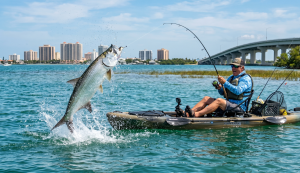
This is where things get real. A 100 lb tarpon on the end of your line and a 12-foot kayak under you is a combination that demands respect and preparation.
When the fish jumps, bow to the king. Drop your rod tip toward the fish during jumps to create slack and reduce the chance of a thrown hook or a broken rod from the impact. Tarpon jump repeatedly and violently, and keeping tension through every leap is how gear gets destroyed.
Be prepared to be moved. Tarpon will pull a kayak significant distances and in directions you don’t choose. Know your surroundings before you hook up. Avoid fishing near heavy boat traffic, bridge pilings, or areas with strong crossing currents that could put you in a dangerous position.
Keep the fight as short as possible. Tarpon are powerful, but they tire, and a fish that’s been fought to exhaustion takes longer to recover and faces a higher risk of post-release mortality. Apply steady, confident pressure throughout the fight. Don’t let the fish sit still and recover mid-fight.
For the release, keep the tarpon in the water at all times if possible. If you need to touch the fish, support it horizontally and never hold a tarpon vertically by the lower jaw, as this can damage internal organs. Hold the fish upright in the water, pointing into any available current, until it kicks free on its own.
One important note on Florida regulations: Tarpon are a catch-and-release-only species, and no harvest is permitted. Tarpon over 40 inches must remain in the water at all times when caught, per FWC guidelines. Only hook-and-line fishing is allowed; snagging, snatch hooking, and spearing of tarpon are prohibited.
Anglers pursuing a Florida state or world record may purchase a tarpon tag through the Florida Fish and Wildlife Conservation Commission for $50, with a limit of one tag per person, per year.
Please note that fishing regulations can change frequently, sometimes daily, weekly, or seasonally, and vary by location based on factors such as water conditions, fish populations, and conservation needs. Always verify current rules with the FWC before heading out.
Safety Considerations
Tarpon fishing from a kayak is exhilarating. It’s also the kind of fishing that requires you to think ahead.
File a float plan with someone on shore before heading out to passes or beaches. Know the tide schedule and how it affects current strength in the passes you’re fishing. Wear your PFD. This is non-negotiable when targeting large fish that can put you in unpredictable situations quickly.
Carry a line cutter or knife accessible without digging through gear. If a fish wraps you in your own line or runs under the kayak, you need to be able to cut free immediately. Keep your hooks attended and never leave a rigged rod where it could contact your body during a sudden run.
The experience of fighting a tarpon from a kayak is unlike anything else inshore fishing offers. It requires preparation, the right gear, and sound judgment on the water. Get those things right, and you’ll have stories worth telling for a long time.
Stop by Economy Tackle before tarpon season heats up. We carry the tackle, leader material, live bait, and local knowledge to get you ready. Visit us at floridakayak.com or come see us in Sarasota.


